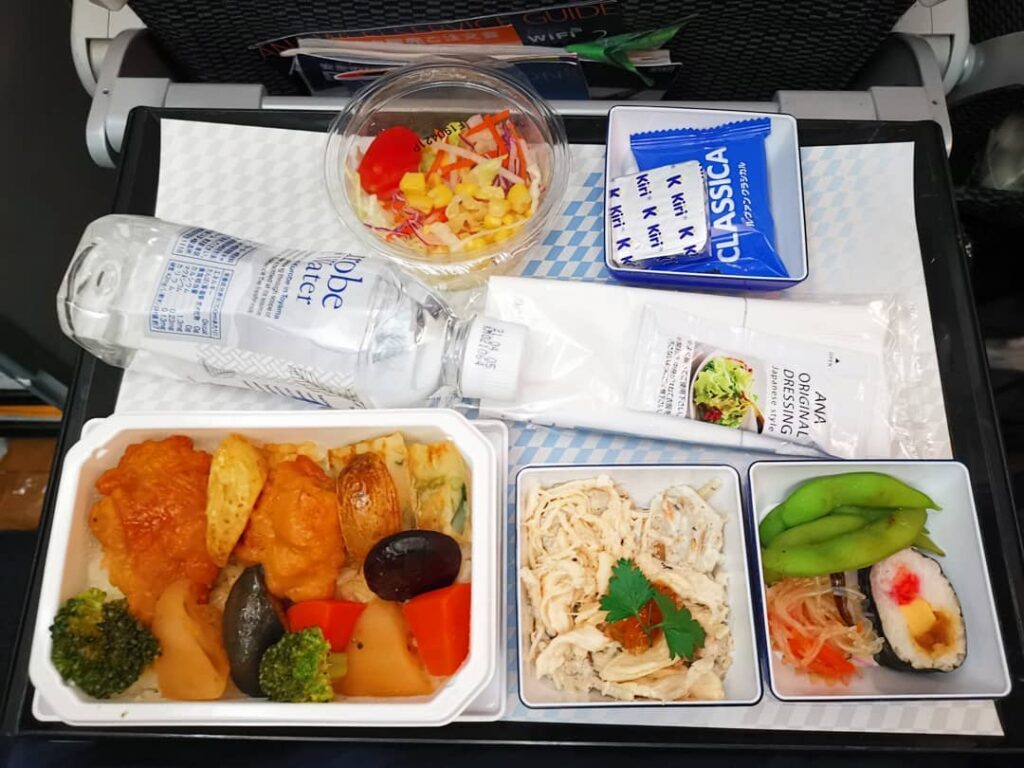
Most travellers are fans of airline food, but as it turns out, you don’t taste food in the air the same way you do on the ground.
Tomato juice does taste different when you’re cruising 30,000 feet in the air and it’s not just tomato juice. All food is going to be a little different when you eat on an aeroplane and there’s a science to back it up. But before we dig into the facts, let’s get one thing straight: Those mass-produced in-flight meal recipes are partly to blame, all of that freeze-drying and vacuum sealing has to mess with taste a little bit. But airline chefs have made leaps and bounds in how they combat tricky aeroplane cabin climates to keep passengers full and happy about their meal choices.
An aeroplane cabin is actually drier than some deserts, humidity can measure in at less than 12%, in some cases. In an environment like this, your taste and smell start to drift. The scent actually starts to deteriorate the minute you step on to a plane but nosedives once your aeroplane climbs. Sweet and salty foods are the ones that suffer the most. According to a study from the Fraunhofer Institute for Building Physics, the atmosphere in an airline cabin reduces your ability to detect these tastes by about 30%. Think of it as your taste buds go numb. The good news, All of those other delicious flavours “spicy, bitter, sour” are still going to make an appearance mid-flight. So what to do when you’re looking to make up for lost taste? Add more salt, of course and that’s exactly what the airlines do.
Your body tastes wine and other alcohol differently as your body dries out as well. Liquids tend to expand and contract as the environment changes. On an aeroplane, wines can thin out and taste more acidic than they would on the ground at your favourite restaurants even if it’s the same wine. One way around this is this, If you’re going to have a glass of wine on your flight, do it early when you’re less dehydrated.
Low pressure and humidity may not be the only things to blame. According to research, people that eat while enduring an increase in noise reported the food to be less salty and sweet than they do when eating in a more quiet setting. That being said, umami the magical fifth taste that adds another dimension to “savoury”. It’s said to be intensified in noisy areas. In fact, many airline chefs use this to their advantage by integrating umami foods into what would otherwise come out bland and unsatisfying. Another thing to keep in mind when ordering is that some flavours like cardamom, curry, and lemongrass, taste more intense at cruising heights. Now you know the core reasons why food tastes different on a plane.
Thanks for stopping by.
Until next time – eat, sleep, travel!
Hasta La Vista.
Dante,
Founder, TravelWithDante.com


0 Comments